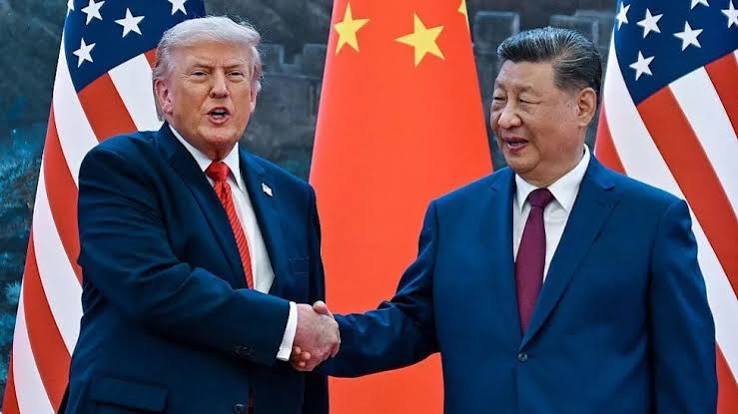
The White House is preparing an unusually elaborate welcome for Chinese President Xi Jinping as he arrives in Washington for a three-day state visit with President Donald Trump.
Xi’s visit to the United States from September 23 to September 25, 2026, is attracting global attention because it comes at a critical moment in US-China relations. The two countries remain economic and technological competitors while also trying to manage disagreements over trade, artificial intelligence, rare earth minerals, Taiwan and other international issues.
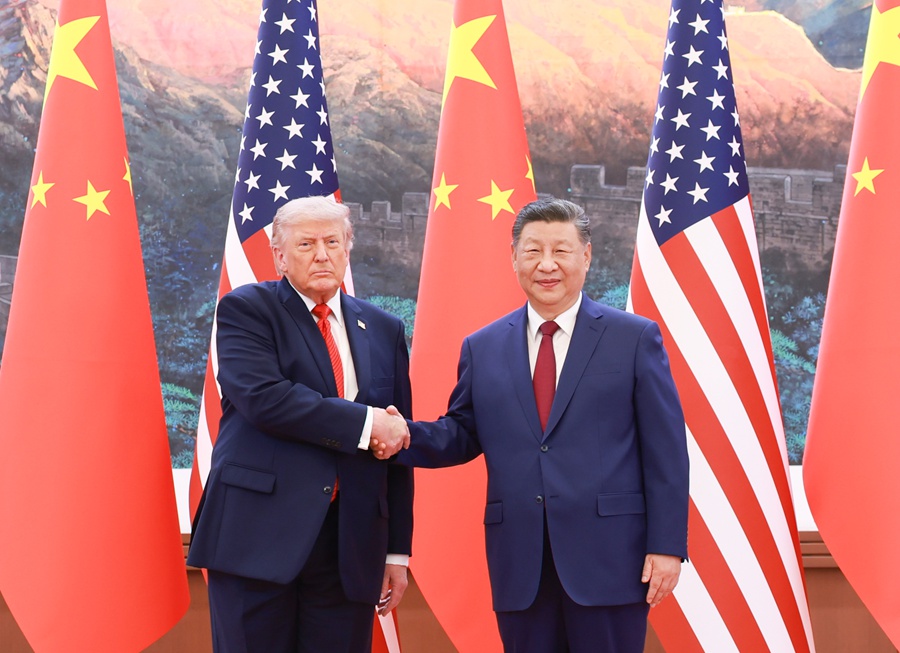
The symbolism surrounding the visit is particularly significant. Trump is scheduled to personally greet Xi at Joint Base Andrews, an unusual gesture for a visiting foreign leader. The White House has also planned a formal arrival ceremony, military review, military flyover and state dinner.
But behind the ceremonial welcome is a much more complicated diplomatic agenda.
Why Xi Jinping’s 2026 US Visit Matters
Xi’s Washington trip is being closely watched because it is his first US state visit in more than a decade. The White House says Xi and his wife, Peng Liyuan, last visited the White House more than ten years ago.
The timing is also important.
Washington and Beijing are simultaneously competing and negotiating across several areas, including:
- International trade
- Tariffs
- Artificial intelligence
- Semiconductor technology
- Rare earth minerals
- Taiwan
- Energy and supply chains
- Agricultural purchases
- Strategic stability
The September meeting follows a period in which Trump and Xi have continued direct diplomatic engagement despite significant differences between the two governments.
The Council on Foreign Relations describes the visit as Xi’s first state visit to Washington in eleven years and highlights the importance of trade, technology, Taiwan and broader strategic competition.
White House Prepares a Major Welcome
The phrase “rolling out the red carpet” captures the scale of the planned ceremony, although the formal diplomatic term is a state visit.
According to the White House, President Trump will welcome Xi Jinping and Peng Liyuan at the White House on Thursday, September 24.
The State Arrival Ceremony is scheduled to involve 479 military personnel representing all branches of the US Armed Forces. The ceremony will include US and Chinese flags, military honors and performances by US military musical and ceremonial units.
The White House also says the ceremony will include:
- A formal arrival ceremony
- National anthems
- Military honors
- A military review
- Ceremonial performances
- A military flyover
- A state dinner
The planned flyover is expected to feature a B-2 Spirit bomber and four F-22 Raptors, according to the White House.
This level of ceremony makes the visit visually significant, but the more important question is what the two governments can accomplish behind closed doors.
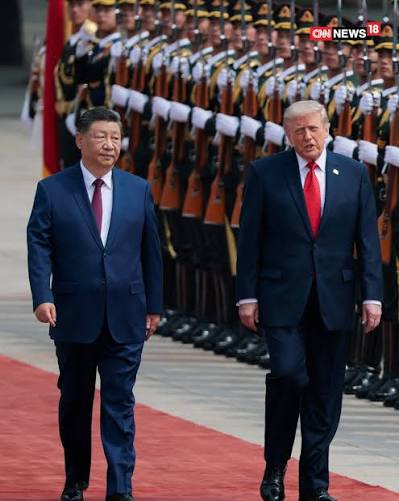
Trump Plans to Personally Greet Xi at the Airport
One of the most notable elements of the visit is Trump’s planned appearance at Joint Base Andrews.
Reuters reported that Trump planned to personally greet Xi when the Chinese president arrived in the Washington area. The report described this as a rare protocol move for a US president.
The gesture matters because diplomatic visits are carefully choreographed. Who welcomes a leader, where the meeting takes place and the level of military ceremony can all carry symbolic meaning.
In this case, the highly visible welcome is occurring alongside difficult negotiations between the world’s two largest economies.
What Will Trump and Xi Discuss?
The ceremony may dominate television coverage, but the substance of the meeting is likely to focus on several major issues.
1. US-China Trade
Trade remains one of the central issues in the relationship.
The United States and China have spent years imposing tariffs, negotiating trade arrangements and attempting to reduce economic tensions.
According to reporting from the Financial Times, extending the current trade truce is expected to be an important objective for Beijing as the November deadline approaches. Other potential areas include Chinese purchases of US agricultural products and commercial agreements.
For businesses, investors and consumers, the outcome could affect supply chains and the cost of goods connected to US-China trade.
However, the precise outcome of the September 24 meeting should not be assumed before the leaders actually meet.
2. Artificial Intelligence
Artificial intelligence has become another major area of competition between Washington and Beijing.
Both countries are investing heavily in AI infrastructure, computing power, semiconductor technology and AI companies.
The summit is therefore taking place at a time when technological competition has become closely connected with economic and national-security policy.
The two governments may discuss mechanisms for AI dialogue and safety while continuing to compete over advanced technology. The exact agreements, if any, will become clearer as the summit progresses.
3. Rare Earth Minerals
Rare earth elements are another major issue.
China occupies an important position in the global rare-earth supply chain, while the United States has been working to develop alternative sources and strengthen domestic and international supply chains.
Reuters reported that the flow of rare earths to the global economy is expected to be among the topics discussed during Xi’s visit.
This issue extends well beyond the two governments.
Rare earth materials are used in technologies including electronics, electric vehicles, renewable-energy equipment and advanced defense systems.
4. Taiwan
Taiwan remains one of the most sensitive issues in US-China relations.
Beijing considers Taiwan part of China, while the United States maintains unofficial relations with Taiwan and provides various forms of support.
The issue is especially complicated because both Washington and Beijing want to avoid an escalation that could destabilize the wider Asia-Pacific region.
The Financial Times reported that Taiwan is expected to be among the issues Xi raises during his Washington discussions.
5. Iran and Other Global Issues
The two leaders may also discuss international conflicts and China’s relationship with Iran.
The Financial Times reported that Xi is expected to discuss the Iran conflict as part of his broader diplomatic agenda.
That illustrates how the Trump-Xi relationship increasingly extends beyond traditional US-China economic issues.

Why the Visit Is Being Called Historic
There are several reasons this visit has attracted such attention.
First, it is a formal state visit by China’s president to Washington after more than a decade.
Second, the ceremony is unusually elaborate.
Third, it comes after years of intense competition between the United States and China.
And fourth, the two governments are attempting to maintain communication while competing over technology, trade and geopolitical influence.
The Center for Strategic and International Studies is tracking the September summit as part of a broader series of Trump-Xi meetings in 2026. Its analysis highlights issues including AI governance, rare earths, maritime security and strategic stability.
A Grand Ceremony Does Not Mean Every Dispute Is Resolved
It is important to separate diplomatic symbolism from policy outcomes.
A state dinner, military ceremony and personal welcome can demonstrate that both governments want to maintain high-level engagement.
They do not automatically mean that Washington and Beijing have resolved their disagreements.
Reuters described the upcoming meeting as taking place against continuing tensions involving trade, technology and Iran.
The AP has also reported that Trump’s approach toward Xi has become considerably more cordial compared with his earlier political rhetoric about China. The AP report notes that the two countries continue to compete in areas such as manufacturing and advanced technology even as their leaders pursue closer diplomatic engagement.
That combination — competition alongside negotiation — is likely to remain a defining feature of US-China relations.
What the Visit Could Mean for the Global Economy
The US and China are two of the world’s most important economies.
Any significant change in their trade relationship can affect companies and consumers far beyond their borders.
Potential areas of global impact include:
Supply Chains
Manufacturers around the world depend on components and raw materials connected to Chinese and American markets.
Changes in tariffs or export rules could influence production costs and supply-chain decisions.
Technology
US-China competition in semiconductors and artificial intelligence could influence the development of next-generation technology.
Electric Vehicles
China is a major producer and exporter of electric vehicles and battery technologies, while the US is attempting to strengthen domestic manufacturing.
Rare Earths
Any change in rare-earth export policies could affect industries ranging from electronics to renewable energy.
Agriculture
US agricultural exporters are watching whether China increases purchases of American agricultural products.
Xi Jinping’s Washington Schedule
The White House has released a detailed outline for the visit.
Wednesday, September 23
Trump is scheduled to greet Xi Jinping and Peng Liyuan at Joint Base Andrews.
Thursday, September 24
The White House plans to hold a formal State Arrival Ceremony.
The ceremony will include military honors, speeches, a military review and a flyover.
Later that evening, Trump and First Lady Melania Trump are scheduled to host Xi and Peng at a State Dinner in the White House East Room.
Friday, September 25
Trump and Melania Trump are scheduled to meet Xi and Peng for tea at the White House.
The couples are then scheduled to visit the National Archives, where they will view historical documents connected with US-China relations.
The White House says the visit will conclude with a farewell at the National Archives.
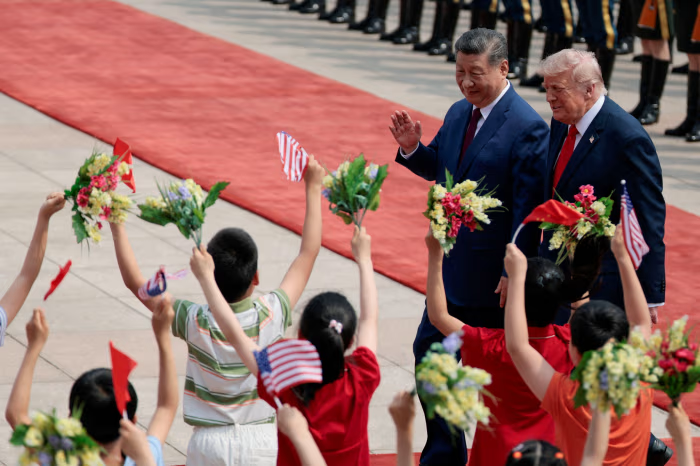
The Symbolism Behind the Red Carpet
Diplomatic ceremonies are not simply entertainment.
They communicate messages to the visiting government, domestic audiences and the international community.
The US decision to provide an elaborate welcome for Xi demonstrates the importance Washington places on maintaining direct communication with Beijing.
At the same time, the ceremony comes during a period of strategic competition.
That creates an interesting contrast:
Ceremonial cooperation and strategic competition are happening at the same time.
The two governments can cooperate on selected economic or diplomatic issues while continuing to disagree about technology, Taiwan, trade and security.
What Businesses and Consumers Should Watch
For ordinary consumers, the most important developments may not come from the ceremony itself.
Instead, attention should focus on any concrete announcements involving:
- Tariffs
- Chinese imports
- US agricultural exports
- Rare-earth exports
- Semiconductor restrictions
- AI technology
- Investment agreements
- Supply-chain policies
If Washington and Beijing reach new agreements, businesses could adjust their purchasing, manufacturing and investment strategies.
If negotiations produce limited results, the broader pattern of competition may continue.
What Happens Next?
The biggest question is whether the summit produces specific agreements or primarily strengthens communication between the two governments.
The answer will depend on the discussions and any official announcements following the meetings.
At this stage, it is important not to confuse expectations with confirmed outcomes.
The visit itself is confirmed. The formal ceremony and state dinner are confirmed by the White House. The broad issues expected to be discussed have been reported by US officials and major news organizations.
But any final trade agreement, technology arrangement or other policy deal should be treated as confirmed only after it is officially announced.
Frequently Asked Questions
When is Xi Jinping visiting the United States in 2026?
Chinese President Xi Jinping’s state visit to the United States is scheduled for September 23–25, 2026. The White House says Trump will host Xi for an official state visit on September 24.
Why is Xi Jinping visiting Washington?
The visit is focused on high-level US-China relations and is expected to cover issues including trade, artificial intelligence, rare earth minerals, Taiwan and other international matters.
Will Donald Trump meet Xi Jinping?
Yes. Trump is scheduled to personally greet Xi at Joint Base Andrews and host him at the White House during the state visit.
Is this Xi Jinping’s first visit to the US?
No. Xi has visited the United States before. However, the White House says this is his first visit to the White House in more than a decade.
Why is the visit called a state visit?
A state visit is a formal diplomatic visit involving official ceremonies and honors. In this case, the White House has planned a State Arrival Ceremony and State Dinner for Xi Jinping and Peng Liyuan.
What are the main issues between the US and China?
Major areas of disagreement and negotiation include trade, tariffs, technology, artificial intelligence, semiconductor controls, rare earth minerals, Taiwan and broader security issues.
Will the Trump-Xi summit change US-China relations?
The eventual impact will depend on the agreements and decisions made during and after the meetings. The ceremonial welcome itself demonstrates high-level diplomatic engagement, but it does not establish that the two countries have resolved their major disagreements.
Final Takeaway
The White House’s red-carpet welcome for Xi Jinping is one of the most closely watched diplomatic events of September 2026.
The visit combines extraordinary ceremony with difficult policy questions. Trump is preparing to personally welcome Xi, while the White House has planned a major military ceremony, flyover and state dinner.
Behind the ceremony, the two governments face a long list of issues — from trade and rare earth minerals to artificial intelligence and Taiwan.
The most important part of the visit will therefore not necessarily be the photographs from the South Lawn or the state dinner. It will be the concrete discussions and announcements that follow.
For the global economy, technology companies, manufacturers and governments around the world, the Trump-Xi meeting could provide important signals about the next phase of US-China relations in 2026 and beyond.
This article is based on information available on September 23, 2026 and should be updated as the summit develops.
About the Author